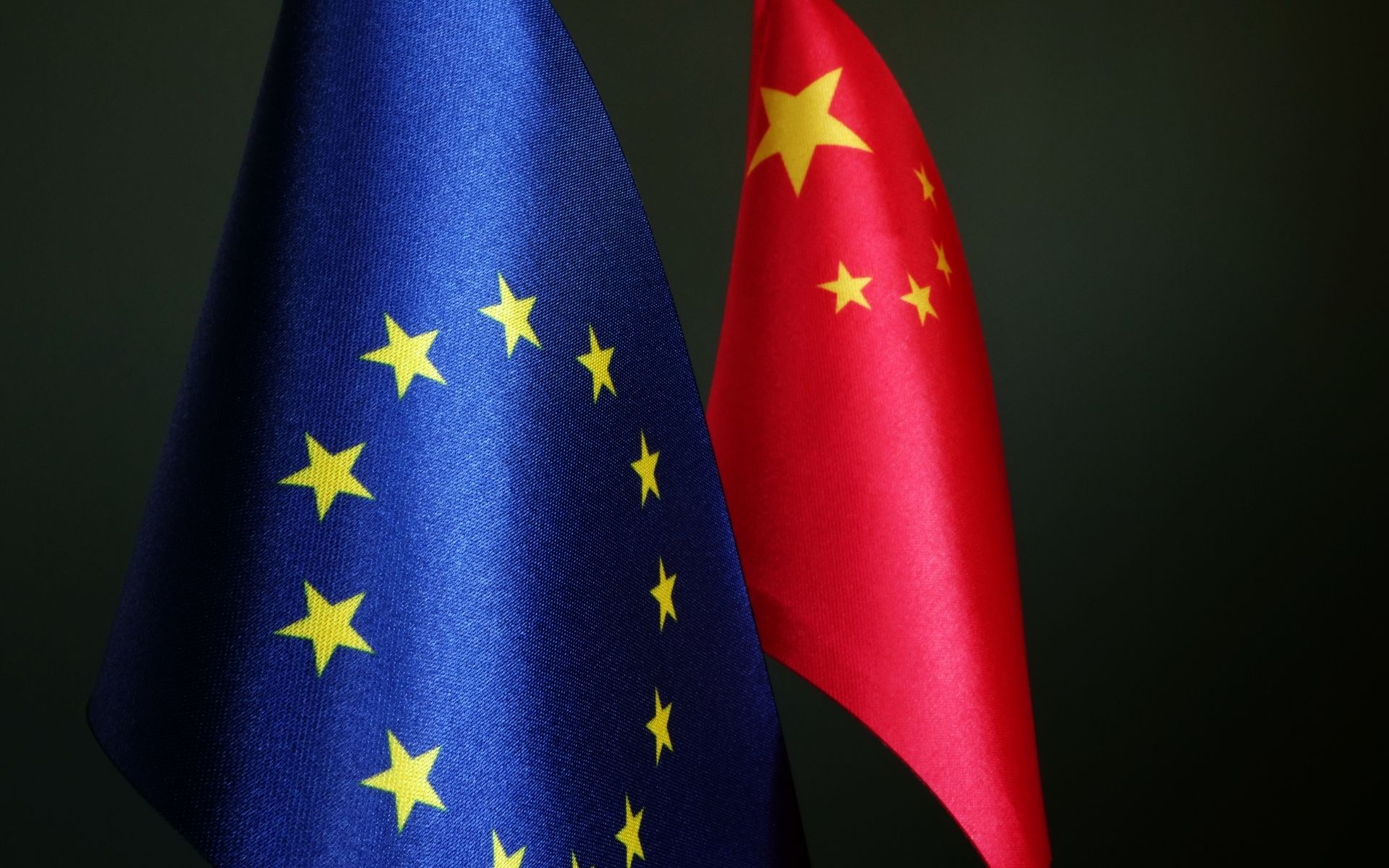
Europe is changing one of the fundamental rules of its economy.
For years, public administrations have largely been encouraged to choose the most competitive offer when spending taxpayers’ money.
Now Brussels wants them to consider something else: whether that money is helping European companies, jobs and strategic industries survive.
On September 9, the European Commission presented a major reform of the EU’s public procurement system that would replace three existing directives with a single regulation.
At the heart of the proposal is a concept that would have sounded much less European only a few years ago: “European preference”.
The reform is officially designed to simplify procurement, improve quality and strengthen European economic security.
But its geopolitical message is difficult to miss.
European industry is under growing pressure from international competitors, and particularly from Chinese companies able to offer products at prices that European manufacturers often struggle to match.
Brussels now wants to make sure that Europe’s enormous public procurement market does not end up strengthening those competitors at the expense of its own industrial base.
Contents
Europe Is Putting Its €2.5 Trillion Market on the Table
The stakes are enormous.
Public procurement represents roughly 15% of EU GDP, covering the money spent by governments, municipalities, hospitals and other public bodies on everything from construction and transport to medicines, software and energy infrastructure.
That makes public contracts one of the most powerful economic tools available to Europe.
Until now, price has often played a decisive role.
The Commission wants to change that balance.
Under the proposal, public money should increasingly support European employment, investment and industrial capacity rather than simply flow towards whichever supplier offers the lowest price.
Executive Vice-President Stéphane Séjourné made the philosophy particularly clear when presenting the reform: European public spending should, where possible, generate jobs and opportunities inside Europe rather than fill the order books of competitors.
The Cheapest Offer May No Longer Win
One of the biggest changes concerns how public tenders will be evaluated.
At least 30% of the assessment of an offer would have to depend on criteria other than price.
Authorities could therefore give greater importance to factors such as security, environmental standards, social criteria, quality and the resilience of supply chains.
In practice, this means a European company would not necessarily have to be the cheapest bidder to win a public contract.
If its offer scores better on strategic criteria, it could receive more points than a lower-cost foreign competitor.
This is a major departure from the logic of simply pursuing the maximum possible discount.
Chinese Companies Could Be Excluded From Some Tenders
The most politically sensitive part of the reform concerns companies from outside the European Union.
Public authorities would be allowed to award additional points to European offers and, in situations where reciprocal access agreements do not exist, potentially exclude operators from third countries.
The same principle could affect European bids that rely heavily on products originating from those countries.
China is not formally banned by the proposal, and the rules would not automatically exclude every Chinese company from European public contracts.
But the mechanism gives EU authorities far more room to protect European suppliers when competitors come from markets that do not provide European businesses with equivalent access.
That is why the reform is widely being interpreted as a response to unfair Chinese competition.
“Buy European” Could Become Mandatory in Strategic Sectors
The proposal goes even further in industries Brussels considers essential to Europe’s future.
For certain strategic supply chains, the principle of “Buy European” could become mandatory rather than simply optional.
The sectors identified include areas such as clean technology, cloud services, artificial intelligence and essential medicines.
The logic is based on economic security.
If Europe becomes excessively dependent on foreign suppliers for critical technologies or medicines, a trade dispute, geopolitical crisis or disruption to global supply chains could quickly become a much larger problem.
Public procurement would therefore be used not just to buy products at the best price, but to maintain strategic production capacity inside Europe.
Brussels Says the New Rules Should Not Make Everything More Expensive
One obvious concern is cost.
If authorities are encouraged to choose European suppliers rather than the cheapest supplier available globally, could taxpayers end up paying more?
The Commission argues that the overall impact should not produce significant additional costs.
Its impact assessment says simpler procedures, increased competition and greater use of negotiation could actually reduce administrative burdens.
Brussels estimates potential savings of as much as €650 million per year in administrative costs.
That will be an important claim to test once the legislation begins moving through the European institutions.
These Rules Are Not in Force Yet
For companies operating in Europe, there is another crucial point: this is still a legislative proposal.
The text must now be negotiated between the European Parliament and the Council of the European Union before it can be formally approved and enter into force.
The Commission has chosen to propose a regulation rather than another directive.
That distinction matters because an EU regulation applies directly and uniformly across member states, instead of requiring each country to transpose a directive into national law.
For countries such as Italy, part of the legal framework supporting national public procurement rules could therefore be established directly at European level.
Italy Supports the Goal but Not the Method
Italy broadly supports the idea of giving European companies greater protection, but Rome is less enthusiastic about the legal instrument chosen by Brussels.
The Commission wants the new rules to take the form of an EU regulation, which would apply directly and uniformly across all member states.
Italian European Affairs Minister Tommaso Foti has argued that a directive would be more appropriate because it would preserve a common European framework while giving national governments greater flexibility to adapt the rules to their own legal systems.
Confcooperative has expressed similar concerns, warning that another major reform could force Italian companies to adjust once again after recent changes to the national procurement code.
At the same time, Italy’s Industry Minister Adolfo Urso has welcomed the central principle of the proposal, saying Europe has finally understood the importance of European preference in protecting its industrial base.
What Could Change for European Companies?
For European businesses, the reform could be significant.
A manufacturer that currently loses a tender because a foreign competitor offers a lower price could become more competitive if factors such as European production, supply-chain resilience, security and environmental standards carry greater weight.
This could be particularly important for industries where European companies face intense price competition from Chinese manufacturers.
Small and medium-sized businesses could also benefit if simplified procedures make public contracts easier to access, although much will depend on the final version approved by Parliament and the Council.
Why China Is at the Centre of Europe’s New Strategy
The dispute goes far beyond public procurement.
Europe has become increasingly concerned about its dependence on China for products and technologies considered essential to the economy of the future.
Electric vehicles, batteries, solar panels, digital infrastructure and clean technologies have all become symbols of the growing competition between the two economic blocs.
Chinese companies can often manufacture these products on an enormous scale and at prices European competitors struggle to match.
Europe has already responded in some sectors with trade-defence measures, including action against Chinese electric vehicles. If you want to understand how quickly that competition is changing one of Europe’s biggest industries, read our analysis of the numbers behind the global electric-car market.
The new procurement rules would add another weapon: using Europe’s own public spending power to support production inside the EU.
Could European Consumers End Up Paying More?
This is the most obvious criticism of a “Buy European” strategy.
If authorities deliberately favour European suppliers even when foreign alternatives are cheaper, the immediate cost of some contracts could rise.
Brussels argues that the reform should not result in major overall increases.
The Commission says simpler procedures, greater use of negotiation and reduced administrative burdens could generate savings of up to €650 million per year.
There is also a broader argument behind the proposal: the cheapest product today may become extremely expensive tomorrow if Europe loses strategic industries and becomes dependent on a small number of foreign suppliers.
Is Europe Becoming More Protectionist?
In a sense, yes — but Brussels would describe the change differently.
The EU is not proposing to close its procurement market or automatically exclude Chinese businesses.
Instead, it wants to introduce stronger reciprocity and give European governments greater power to protect strategically important sectors.
That represents a major shift from the philosophy that dominated European economic policy for decades, when open markets and maximum competition were often considered goals in themselves.
Economic security is now becoming just as important.
The Battle Over the Rules Has Only Just Begun
Nothing changes overnight.
The proposal must now be negotiated by the European Parliament and EU member states, and some of its most controversial provisions could still be modified before final approval.
Questions remain over how “European” an offer must be to receive preferential treatment, which sectors will face mandatory Buy European requirements and how the rules will interact with international trade agreements.
What is already clear, however, is the direction Europe is taking.
Brussels increasingly sees public procurement not simply as a way of purchasing goods and services, but as an instrument of industrial and geopolitical policy.
The full legislative proposal and accompanying documents are available from the European Commission.
For China, that could mean competing for European public contracts becomes considerably harder. For Europe, it marks a broader realization that the fight to protect its industry may require changing rules that once seemed untouchable.