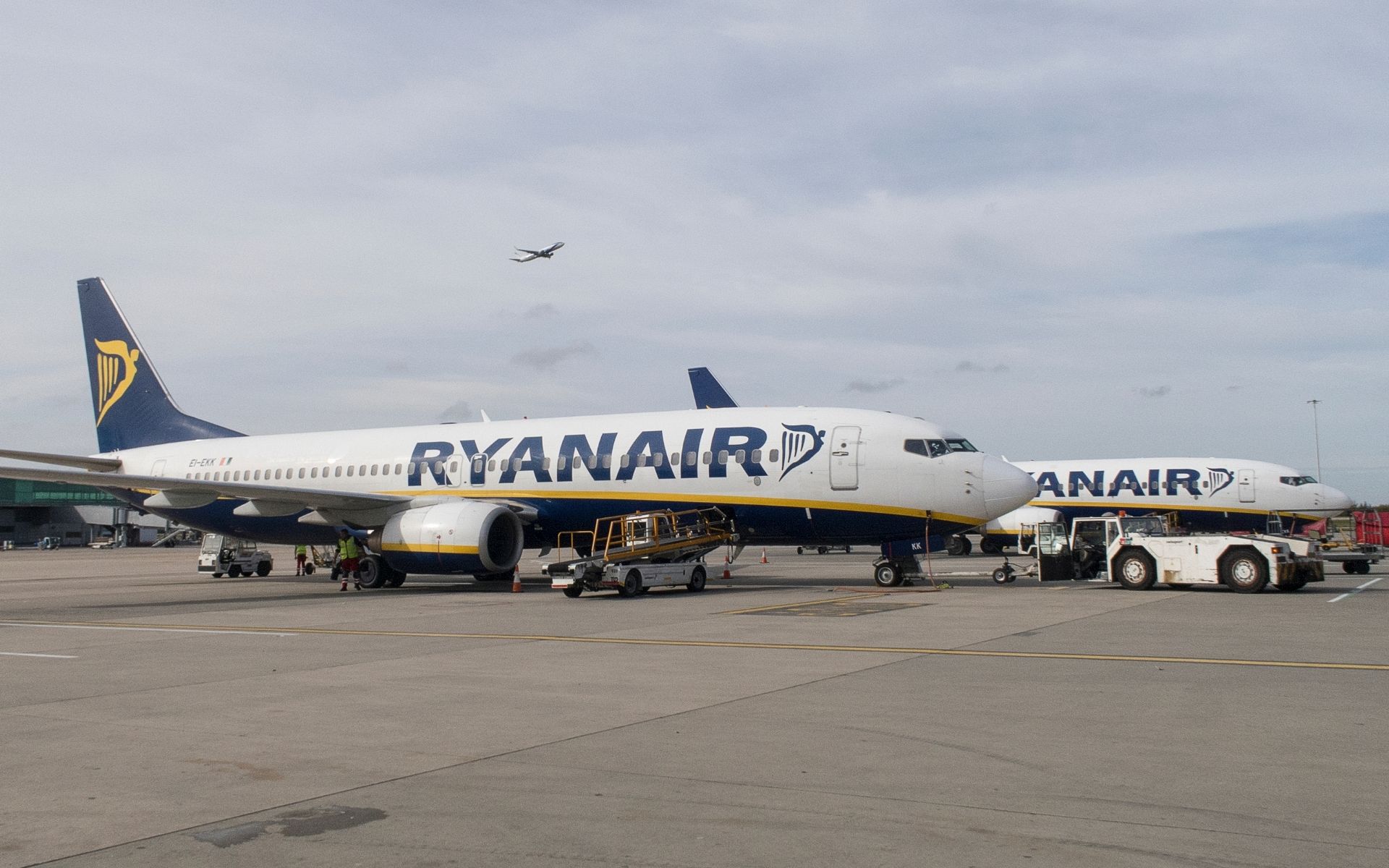
Ryanair is preparing for a more expensive winter across Europe. The Irish low-cost airline has decided to limit its winter capacity as the cost of jet fuel remains exceptionally high, while warning that airfares across Europe could rise significantly if oil prices remain at current levels into summer 2027.
The company has reduced its passenger forecast for the financial year ending in March 2027 from 216 million to 214 million passengers. The reduction will mainly affect the period between November 2026 and March 2027, when airlines traditionally face weaker demand and lower profitability. Ryanair expects the decision to reduce its exposure to expensive, unhedged fuel to cut its winter losses by approximately euro 70 million to euro 100 million.
The airline carried 22.2 million passengers in August, while traffic between April and October is still expected to grow by more than 5%. The strategy is therefore not a general retreat from the European market. Ryanair is trying to protect profitability during the months when operating flights is less attractive, while continuing to expand during the summer season.
Contents
Why fuel prices are changing the airline’s strategy
The main problem is the cost of aviation fuel. Ryanair said that jet fuel is currently trading at around dollars 140 per barrel, roughly twice the price at which the company has hedged most of its fuel requirements.
The airline has hedged approximately 80% of its jet-fuel needs through March 2027 at around dollars 67 per barrel. That gives Ryanair an important advantage over competitors with less extensive fuel hedging. But it does not completely protect the company from the current energy shock.
The remaining fuel exposure is becoming increasingly expensive. Ryanair’s decision is therefore partly a defensive move: rather than operate aircraft at a loss during the winter, the company can reduce frequencies and redeploy capacity to markets where demand and margins are stronger. (ReutersAttachment.png)
European airfares could rise in 2027
The most important message for passengers, however, concerns ticket prices. Ryanair has explicitly warned that if high oil prices continue into the summer 2027 season, short-haul airfares across Europe are likely to increase materially.
The reason goes beyond Ryanair itself. Airlines with less fuel protection may have to reduce their schedules, ground aircraft or even struggle to remain financially viable. A reduction in available seats combined with stable or rising demand would put upward pressure on fares.
Ryanair therefore expects the current fuel crisis to produce a broader restructuring of the European low-cost market. The company also expects its own fares to remain relatively weak in the immediate term. Second-quarter fares have been trending modestly below the previous year, while the stronger impact of the fuel crisis is expected to emerge if high oil prices persist into 2027.
The Italian routes at risk
One of the most important questions for European passengers is which routes will actually disappear. Ryanair has not yet published a complete list of routes that will be cut specifically as a consequence of the latest fuel-price decision.
However, analysis of the previous winter’s financial performance identifies several Italian connections as particularly vulnerable. Data cited by Italian media indicate significant losses on a number of routes linking Italian airports with London Stansted, including:
- Rome Ciampino – London Stansted
- Milan Bergamo – London Stansted
- Milan Malpensa – London Stansted
- Venice Treviso – London Stansted
These routes reportedly generated net losses of between approximately euro 2.7 million and euro 4.7 million during the November 2025–March 2026 period. Other connections identified as particularly exposed include:
- Bari – Weeze
- Rome – Gran Canaria
These routes should therefore be considered potentially vulnerable, rather than officially cancelled at this stage. For passengers, the most likely effect may initially be a reduction in frequencies rather than a complete cancellation of a route. This distinction is important because Ryanair has said it intends to keep overall winter capacity broadly stable year on year, even while reducing its exposure to the most expensive fuel costs.
Greece has already seen major cuts
Some European routes have already been officially removed from Ryanair’s winter network, although for reasons that predate the latest fuel-price announcement.
Greece is one of the clearest examples. Ryanair announced the closure of its three-aircraft base at Thessaloniki for Winter 2026. The move means approximately 700,000 fewer seats, a 45% reduction compared with Winter 2025, and the loss of 12 routes.
The affected connections include:
- Thessaloniki – Berlin
- Thessaloniki – Chania
- Thessaloniki – Frankfurt
- Thessaloniki – Gothenburg
- Thessaloniki – Heraklion
- Thessaloniki – Niederrhein
- Thessaloniki – Poznan
- Thessaloniki – Stockholm
- Thessaloniki – Venice Treviso
- Thessaloniki – Zagreb
- Athens – Milan Malpensa
- Chania – Paphos
Ryanair will also suspend its winter operations at Chania and Heraklion. The company has blamed the decision primarily on Greek airport charges, particularly those applied by Fraport Greece and Athens International Airport.
These cuts should therefore not be presented as a direct consequence of the latest fuel-price announcement. They are part of a broader restructuring of Ryanair’s European network.
Belgium is another major case
Belgium is also facing a substantial reduction in Ryanair capacity. The airline had already announced plans to remove approximately 2 million seats from its Brussels schedule covering Winter 2026 and Summer 2027.
Ryanair has also removed five aircraft from its Charleroi base. The earlier decision was linked to increases in Belgium’s aviation tax and additional costs at Charleroi.
Ryanair had announced the removal of 20 routes, including 13 from Charleroi and seven from Brussels Zaventem, for the Winter 2026/27 schedule. Again, this is a different cause from the current fuel-price shock. But the two developments are now converging: higher taxes and airport charges reduce the attractiveness of some airports, while expensive fuel makes marginal routes even harder to operate profitably.
Why Ryanair can still grow in summer
Despite the winter cuts, Ryanair is not abandoning its expansion strategy. The company expects passenger numbers during the April–October summer period to rise by more than 5%, from around 138 million to 145 million.
This is an important detail because it shows that the current strategy is not simply about shrinking the airline. Ryanair is effectively attempting to move capacity away from the least profitable winter operations and towards the stronger summer market.
The company’s financial position also remains relatively strong. Ryanair recorded a record euro 2.26 billion profit after tax before exceptional items in its 2025/26 financial year, while revenue increased by 11% to euro 15.54 billion. The company therefore enters the current fuel crisis from a stronger position than many of its competitors.
The impact on passengers
For travellers, the consequences could become visible in several ways. The first is fewer flights. When an airline reduces frequencies on a route, passengers have fewer departure times to choose from. This can make flights that remain available more valuable, particularly on popular weekends and holiday periods.
The second is higher fares. Airlines use dynamic pricing systems, meaning that ticket prices increase when available seats become scarce and demand remains strong. A reduction in capacity can therefore have an effect beyond the flights that are directly cancelled. If Ryanair and other airlines reduce the number of seats available on a particular European route, competitors may also be able to charge more.
The third consequence could be a change in the European low-cost map. Airports with lower charges and stronger incentives may attract aircraft withdrawn from more expensive locations. Ryanair has already indicated that it is prepared to move aircraft towards more competitive markets rather than continue operating routes that generate losses.
Ryanair’s warning goes beyond Ryanair
The significance of the announcement is therefore larger than the airline itself. Ryanair is Europe’s largest low-cost carrier, and its network decisions can influence the entire short-haul market. The company is warning that if oil prices remain high through 2027, European short-haul fares will have to rise.
At the same time, airlines with less effective fuel hedging could be forced to reduce capacity. That could create a classic supply-and-demand effect: fewer seats, fewer competitors and higher prices. The process has already begun in some European markets, although not all current route cancellations are caused by fuel costs.
For passengers, the important period will be the coming months, when airlines finalise their winter schedules and begin making decisions about their Summer 2027 capacity. If energy prices remain elevated, the era of extremely cheap European flights could become significantly more difficult to sustain.