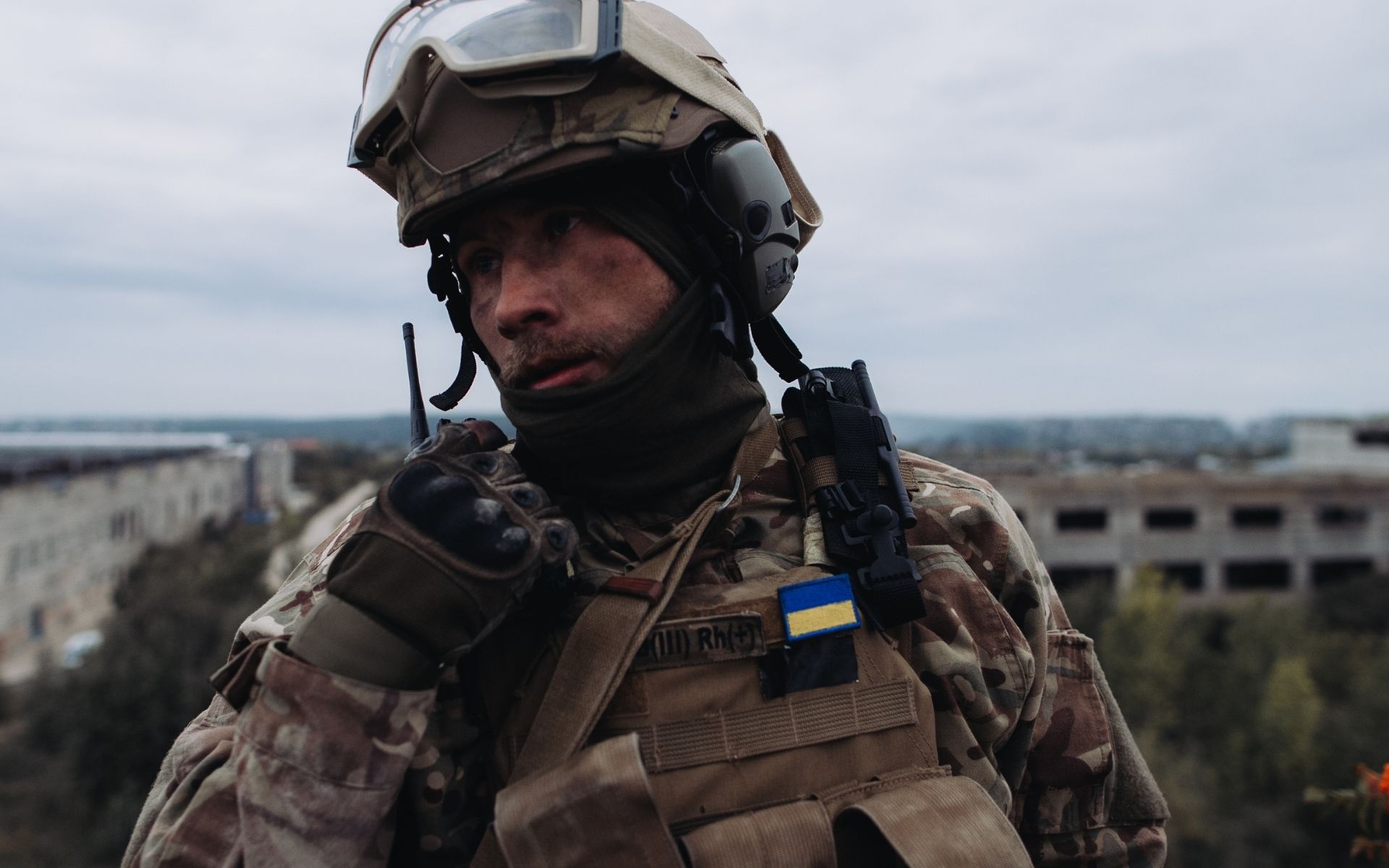
The war in Ukraine is increasingly becoming more than a confrontation between Russia and Ukraine. Moscow is building an increasingly important network of relationships with countries that challenge the Western-led international order, while the European Union continues to provide political, financial and military support to Kyiv.
The picture is more complex than the idea of two formally opposed military blocs, but the direction is increasingly clear: North Korea is directly supporting Russia with troops, China is providing crucial economic and industrial support, while India remains one of Moscow’s most important strategic partners. At the same time, Donald Trump’s United States is trying to position itself at the centre of diplomatic efforts to end the war, maintaining contacts with both Moscow and Kyiv.
Contents
North Korea is already on Russia’s side
The clearest case is North Korea. Pyongyang has gone far beyond political support for Moscow. North Korean soldiers have already participated in military operations alongside Russian forces, initially in Russia’s Kursk region, while North Korea has also supplied Russia with artillery ammunition and missiles. According to Reuters, Ukrainian officials have reported the deployment of additional North Korean military personnel and missile capabilities, while analysts increasingly describe Pyongyang as one of Moscow’s most important military partners.
In the latest development, Kim Jong Un has again pledged firm support for Putin and described Russia’s war in Ukraine as a “sacred war”. This makes North Korea the only one of the three Asian countries that can currently be described as a direct military participant on Russia’s side.
China and India are different cases
China and India require a more cautious interpretation. Beijing has not announced the deployment of Chinese combat troops to Ukraine. Its support for Russia is instead primarily economic, technological and industrial. China has become a major supplier of goods and components that can have military applications, helping sustain Russia’s industrial capacity during the war, while maintaining its strategic partnership with Moscow.
India has followed a different path. New Delhi has preserved close defence and energy relations with Russia, including its large purchases of Russian oil, but Prime Minister Narendra Modi has repeatedly called for dialogue and a peaceful solution. During his latest meeting with Putin, Modi again said that India supports efforts to end the war. India therefore cannot simply be described as a military ally of Russia in Ukraine.
Europe remains firmly behind Kyiv
On the other side of the geopolitical divide, the European Union remains firmly committed to Ukraine. Brussels says that the EU and its member states have provided more than euro 220 billion in overall support, including euro 77.9 billion in military assistance, while European governments continue to finance weapons, ammunition and air-defence systems.
In September, EU countries were also discussing how to accelerate financial support for Kyiv through the bloc’s euro 90 billion loan programme for 2026–27. Germany alone has become one of Ukraine’s most important military supporters as American assistance has become less predictable under Trump’s presidency.
The result is a growing strategic contrast: Europe is increasingly committed to helping Ukraine resist Russia, while Moscow can rely on a network of powerful partners outside the Western alliance system.
Trump between Moscow and Kyiv
The United States occupies a different position. Donald Trump has not simply aligned Washington with either side of the conflict. Trump’s administration has repeatedly maintained direct contacts with both Vladimir Putin and Volodymyr Zelenskyy, while attempting to restart peace negotiations that have repeatedly stalled. U.S. representatives have recently travelled to both Moscow and Kyiv, and Washington has continued to push for agreements designed to reduce the intensity of the conflict. The latest example is Trump’s proposal for a halt to attacks on energy infrastructure, which Ukraine has accepted only conditionally while demanding guarantees that Russia will respect any agreement.
This does not make the United States a genuinely “super partes” actor: Washington remains a major Ukrainian partner and NATO member. But, for the purposes of understanding the current geopolitical landscape, Trump’s America is increasingly playing the role of mediator between a European bloc firmly backing Kyiv and a Russia increasingly connected to China, India and, militarily, North Korea.