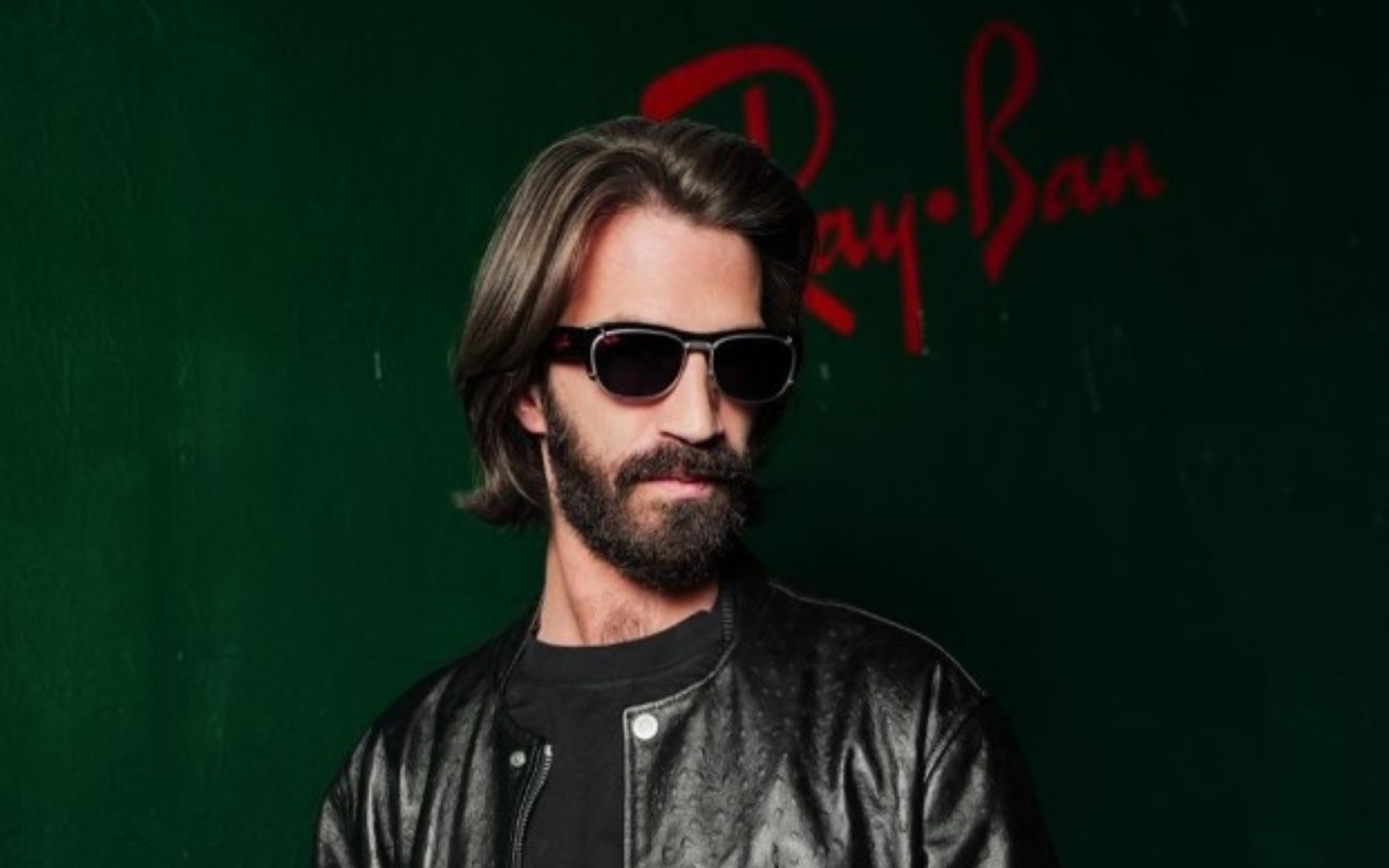
A multibillion-euro inheritance, a family holding company beset by tensions, investments ranging from mineral water to newspapers and, finally, a decision to speak candidly in front of the cameras. Leonardo Maria Del Vecchio is trying to build an identity that goes beyond the surname he carries: that of his father, Leonardo Del Vecchio, the founder of Luxottica and one of the entrepreneurs who have most profoundly shaped Italian capitalism. His strategy is unfolding on two fronts: the battle over the future of the family fortune, and a personal business project whose reach has expanded rapidly in recent years.
Now 31, the fourth of the founder’s six children, Leonardo Maria has developed an increasingly distinctive public profile, straddling the worlds of business, luxury and often provocative personal communication. His ambition appears to extend beyond inheriting a place in Italian capitalism: he wants to become an independent player, investing across different industries, acquiring established brands and taking part in public debate. The deals made through LMDV Capital and his recent media appearances offer a way to trace this evolution, while also highlighting the distance between his stated ambitions and the results still to be secured.
Contents
The Del Vecchio inheritance and the battle for Delfin
Leonardo Maria’s business trajectory cannot be separated from the succession following his father’s death in June 2022. The family fortune is not limited to Luxottica: it also includes Delfin, the Luxembourg-based holding company that owns a major stake in EssilorLuxottica and significant shareholdings in other leading Italian financial groups, including Generali, UniCredit and Monte dei Paschi di Siena. The holding’s capital was divided into eight equal stakes, allocated to the founder’s six children, his widow Nicoletta Zampillo and Rocco Basilico, her son from a previous relationship. When disagreements arise among the heirs, this ownership structure makes strategic decisions more difficult.
The attempt to buy out his siblings Luca and Paola has been one of the most ambitious moves in Leonardo Maria’s strategy. The transaction, estimated by financial media at around 10 billion euro, could have increased his stake in Delfin from 12.5% to 37.5%, making him its largest individual shareholder. The plan, however, encountered difficulties in financing negotiations and disagreements over the holding’s governance. It should therefore be understood as an attempt to consolidate control, not as a completed acquisition. Reuters has examined the scale of the deal and its potential impact on the family’s balance of power.
In August 2026, Del Vecchio also left all his executive positions at EssilorLuxottica, including the presidency of Ray-Ban and his role as chief strategy officer. The move was presented as a step towards new business projects, but also as a response to what he described in a letter to the company’s leadership as a management style that had become too detached from employees. Leaving the executive team does not mean leaving the ownership structure: through his stake in Delfin, Leonardo Maria remains indirectly connected to the group founded by his father. The move instead marks a shift from an internal management role towards building his own business platform.
From Acqua Fiuggi to hospitality and industry: a growing portfolio
The second front is LMDV Capital, the family office founded in 2022 to invest in companies and brands across different sectors. According to an analysis published by Milano Finanza in March 2026, the firm had made around 30 investments worth approximately 500 million euro in total. The stated common thread is to develop Italian businesses and established brands, often with a long history, through new capital, commercial strategies and stronger positioning. The portfolio spans real estate, restaurants, hospitality, technology, manufacturing and entertainment: a broad range of activities that requires management expertise as well as financial resources.
One of the most recognisable deals involves Acqua e Terme Fiuggi, a historic Italian mineral-water brand acquired through companies controlled by LMDV Capital. The aim is to relaunch the brand through industrial investment, product renewal and commercial expansion, including in international markets. The challenge is to turn a familiar name into a stronger, more competitive business in a sector where brand reputation must be matched by production efficiency, distribution and the ability to compete. Media reports have described a multi-year investment and expansion plan, but future targets should not be confused with results already achieved.
Mineral water is only one part of a much broader strategy. The portfolio also includes the Twiga hospitality brand, restaurant businesses, high-end property, investments in machinery and technology, as well as stakes in companies such as IMA and RINA. In entertainment, Del Vecchio has invested in Leone Film Group; in technology, he has backed EsaNanoTech, which is working on the industrial development of graphene-based materials. The portfolio’s diversity is both an opportunity and a test: it spreads exposure across different sectors, but also makes company selection, cost control and the ability to create real synergies crucial.
Publishing, from the Gedi bid to newspaper ownership
Entering the news business may be the most sensitive step in Del Vecchio’s diversification, because it brings him into a sector where an owner’s financial power intersects with editorial pluralism and independence. After attempting to enter Gedi, the group behind publications such as la Repubblica and La Stampa, without completing an acquisition, LMDV Capital strengthened its position in publishing through two significant transactions. Del Vecchio acquired a 30% stake in Il Giornale and, in May 2026, completed the purchase of 80% of Editoria Nazionale, the group that publishes Il Giorno, La Nazione, Il Resto del Carlino and the national newspaper QN.
Del Vecchio has described the acquisition as a long-term industrial investment, saying he wants to put technology and expertise at the service of journalism while respecting each publication’s identity. The real test, however, goes beyond statements of principle: the challenge will be to reconcile the owner’s objectives with newsroom independence, in an industry facing declining print circulation, pressure on advertising revenues and changing news-consumption habits. Investing in publishing means buying companies, but it also means taking responsibility towards readers, journalists and democratic debate.
The publishing project is part of a wider effort to build a portfolio in media and entertainment. His stake in Leone Film Group and investments in audiovisual businesses point to an interest in content and brands that can reach different audiences. It is too early to know whether these deals will become an integrated media group or remain separate investments, but newspaper ownership significantly broadens Del Vecchio’s public role. The move could have political and cultural implications, although it would be premature to assume that every company in his portfolio will share the same editorial line.
From Lilli Gruber to Fedez and Marra: when business becomes a show
Del Vecchio’s public persona is shaped by more than acquisitions. On 29 January 2026, he appeared on La7’s Otto e mezzo, interviewed by Lilli Gruber, to discuss investment, news and politics. He defended his decision to invest in newspapers by stressing the importance of authoritative journalism, particularly at a time when younger generations increasingly turn to social media for information. He also praised Italy’s current political climate and the government led by Giorgia Meloni, while saying he had previously voted for Matteo Renzi as well. The interview presented an entrepreneur keen to take part in public debate rather than simply carry out financial transactions.
The tone changed sharply when he appeared on Pulp Podcast, hosted by Fedez and Marra, in an episode previewed in October 2026. Del Vecchio spoke more personally about wealth, relationships and aspects of his private life. The contrast with a conventional business interview is itself part of the story: he said he wanted to show a side of himself that, in his view, a chief executive or press office would probably have advised him not to reveal. Some of his deliberately provocative remarks quickly attracted widespread media attention.
The two appearances point to a communication strategy that alternates between institutional language and highly personal disclosure. In the first, Del Vecchio sought to explain and legitimise his move into publishing and public debate; in the second, he leaned into personal exposure and the ability to spark conversation. Public recognition, however, is not the same as business credibility: it may make an entrepreneur or brand more visible, but it does not by itself prove that acquisitions are sound, companies are performing well or long-term value is being created.
What comes next: new ventures, newspapers and private life in the spotlight
The next chapter will depend on Del Vecchio’s ability to consolidate a rapidly expanding portfolio and clarify the role he intends to play in the family inheritance. Leaving EssilorLuxottica gives him more room to focus on LMDV Capital, while the Delfin succession remains a separate and complex matter, shaped by financing negotiations and relationships with the other heirs. The challenge will not simply be to buy more companies, but to turn a diverse collection of investments into a coherent industrial strategy, capable of delivering lasting results rather than media attention alone.
His private life has also become a prominent part of the public narrative. Leonardo Maria Del Vecchio has a daughter, Bianca, with his former partner Sara Soldati. In 2026, their relationship became the subject of legal proceedings concerning custody arrangements: Soldati filed a complaint, allegations Del Vecchio has denied, and the two subsequently reached a temporary agreement over their daughter’s care. In September, the entrepreneur publicly said that he and Soldati were trying to raise their daughter together and spoke of renewed understanding between them. It is more accurate to describe this as an attempt to rebuild their co-parenting relationship, rather than treating public statements and temporary arrangements as definitive proof of a romantic reconciliation.
Ultimately, Leonardo Maria Del Vecchio is at a stage where his surname gives him resources and access to the highest levels of Italian business, but cannot substitute for results. His next challenge is to turn rapid acquisitions and public visibility into a recognisable, sustainable business project. Newspapers, mineral water, hospitality, technology and the future of the family holding company all offer opportunities. What remains to be seen is whether his defining achievement will be building a solid business group, or keeping the spotlight firmly on himself.