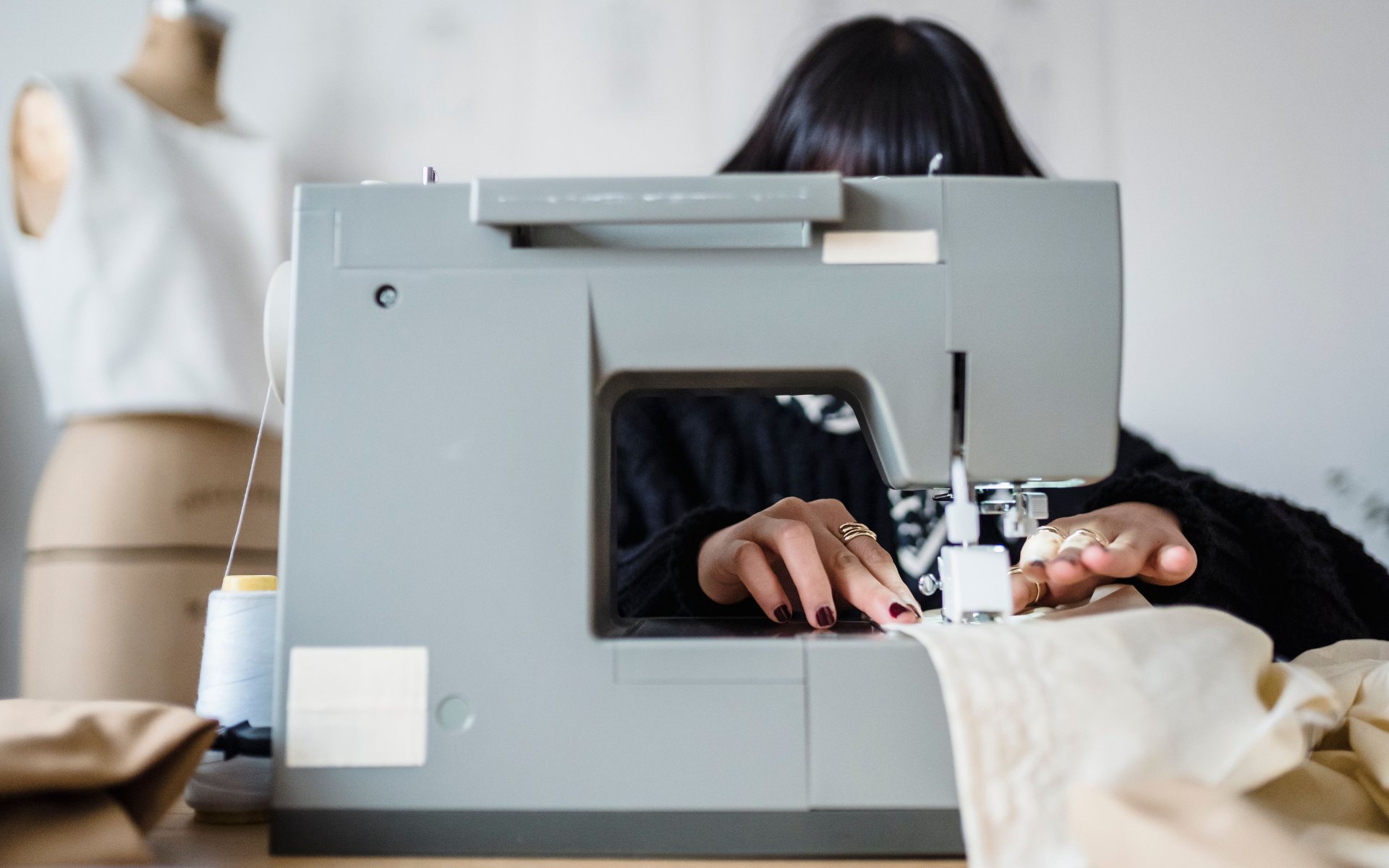
The tailoring profession in Italy balances traditional craftsmanship with modern business opportunities. Far from being an outdated trade, custom tailoring remains a key pillar of Italian fashion.
Whether you want to craft bespoke garments, launch a home-based business, or enter mass manufacturing, building a successful career requires structured training and clear business planning.
Contents
High School and Training Options in Italy
Building a solid foundation starts early. In Italy, specialized vocational institutes provide direct entry into the textile and fashion sectors:
- Professional High Schools (Istituto Professionale – Made in Italy): These 5-year public high schools offer the Industria e Artigianato per il Made in Italy track, specializing in Produzioni tessili-sartoriali. Students learn pattern making, garment construction, and industrial techniques.
- Regional VET Courses (IeFP – Operatore dell’Abbigliamento): These 3- to 4-year vocational courses focus strictly on practical tailoring techniques and rapid job placement.
- Higher Academies (Post-Diploma & Academies): After high school, aspiring tailors often attend specialized academies (such as Accademia Costume & Moda or ITS Foundations) to master advanced pattern drafting and fashion CAD software.
The Sustainable Boom: Vintage, Upcycling, and Reusing
Tailoring is experiencing a massive revival today. This growth is driven by consumer demand for eco-sustainability and slow fashion. Younger generations increasingly reject fast fashion in favor of vintage clothing, garment repair, and upcycling.
Consequently, modern tailors are no longer just making new clothes from scratch. They alter thrifted garments, redesign vintage pieces, and repair luxury clothing to extend its lifecycle. Positioning your business around sustainable fashion and garment care opens a rapidly growing, eco-conscious market.
Starting Small: The Home-Based Digital Atelier
Launching a tailoring business does not require a commercial lease immediately. Starting from home allows creators to keep overhead costs low.
To operate legally from home in Italy, you must assign a dedicated room for your workshop and register as an artisan business (ATECO Code 14.21.20—Confezione su misura di abbigliamento esterno). You will file a certified notification of activity (SCIA) with your local municipality (SUAP) and open a sole proprietorship (Partita IVA) under the flat-tax regime.
At this stage, digital marketing drives client acquisition. Successful home tailors showcase their upcycling transformations on social media, offer digital consultations, and take clients by appointment only.
Scaling Up: Opening a Physical Workshop or Atelier
As your client list grows, transitioning to a dedicated commercial space (classified under urban code C3 as an artisan laboratory) becomes necessary.
A physical atelier allows you to invest in heavy-duty equipment, such as industrial sewing machines, professional steam ironing stations, and fitting rooms. Having a physical shop builds trust for high-ticket items like bespoke suits, bridal gowns, and luxury restorations. At this stage, tailors often hire apprentices or specialized seamstresses to scale production.
Entering Mass Retail and Industrial Production
The tailoring craft extends beyond individual client appointments. High-end fashion houses and mass retail brands continuously recruit skilled textile technicians.
Entering industrial production requires specific skill sets:
- Prototype Tailor (Campionarista): These specialists translate designer sketches into physical first-edition garments for production runs.
- Patternmaker (Modellista): Professionals who use CAD software to scale patterns across standard commercial sizes for mass assembly lines.
- In-Store Retail Tailors: High-end retail boutiques employ in-house tailors to adjust off-the-rack garments for customers on-site.
In conclusion, becoming a tailor in Italy offers versatile career paths. By mastering technical skills, embracing sustainable fashion trends, and scaling strategically from a home studio to an atelier or industrial company, creators can build a highly profitable modern business.