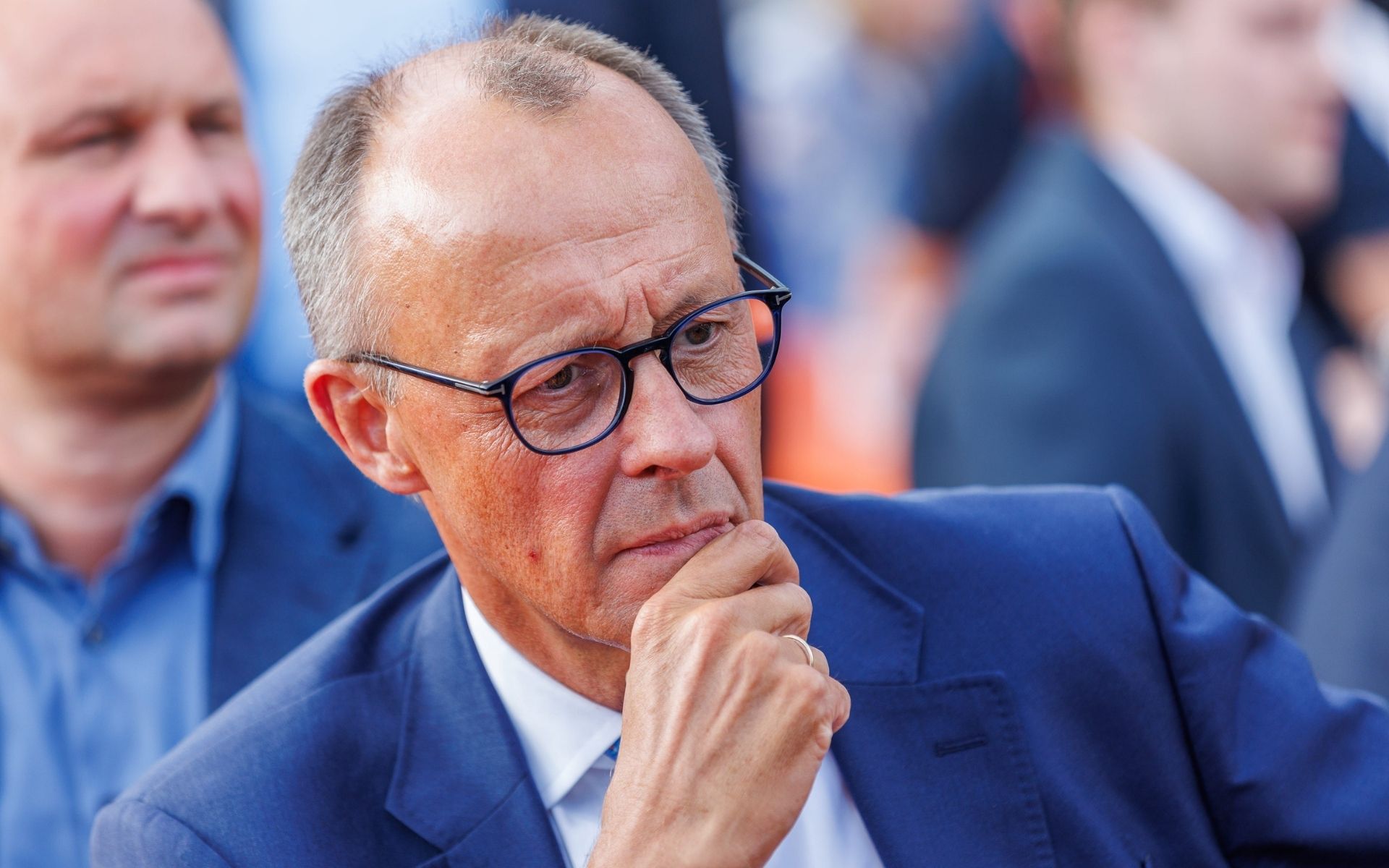
Germany’s latest regional elections have opened a new phase in the country’s political landscape. After the AfD’s victory in Saxony-Anhalt and its record result in Mecklenburg-Vorpommern, Sunday’s vote in Berlin confirmed the difficulties facing Germany’s traditional centrist parties.
The biggest problem is for Chancellor Friedrich Merz and his CDU (Christlich Demokratische Union Deutschlands), which fell below the 5% threshold in Mecklenburg-Vorpommern and, for the first time in post-war history, failed to win seats in the regional parliament.
Contents
The vote putting pressure on Merz
The figures point to a profound shift in the German electorate. In Saxony-Anhalt, the AfD won 43.8% of the vote, more than twice the CDU’s 17.2%. Two weeks later, in Mecklenburg-Vorpommern, Alice Weidel’s party won 38.2%, ahead of the SPD on 35.5%, while the CDU collapsed to just 4.9%. Berlin produced a different result, but it was still problematic for Merz: Die Linke came first with 25.7%, followed by the CDU with 18.8% and the AfD with 16.3%.
The problem is no longer limited to Germany’s regional elections. In national opinion polls, the AfD has been consistently ahead of the CDU/CSU. The latest INSA poll puts the AfD at 29% and the CDU/CSU at 20%, while the September ARD-DeutschlandTREND found that only 13% of respondents were satisfied with Merz’s performance as chancellor.
Despite the results, Merz has ruled out stepping down. After the Mecklenburg-Vorpommern election, he described the outcome as a “catastrophe” but insisted that his government would continue.
More weapons to protect Germany and boost the economy
Against this backdrop, Germany’s policy of rapidly increasing defence spending takes on a significance that goes beyond national security. Merz has repeatedly argued that Europe needs to dramatically strengthen its defence capabilities in response to the threat posed by Russia and that Germany should become one of the main industrial engines behind Europe’s new security policy.
The federal budget provides for euro 109.7 billion in defence spending in 2027, while the government aims to increase defence expenditure to 3.5% of GDP by 2029.
The transformation could also have major economic consequences. Rheinmetall, Germany’s leading defence company, increased its revenue by 39% in the first half of 2026, while orders for ammunition, weapons systems and air-defence equipment continued to grow rapidly.
Expanding production can therefore generate investment, jobs and additional demand across a much wider industrial supply chain. But an important question remains: how much of the additional GDP generated by military spending would represent genuine new economic growth, and how much would simply reflect the reallocation of public resources towards defence?
The firewall against AfD remains in place
At the same time, Merz continues to defend the so-called Brandmauer, the political firewall preventing the CDU from governing with the AfD or relying on its support.
The position is becoming increasingly difficult precisely because of the AfD’s electoral strength. The party is now powerful enough to make the formation of regional governments more complicated, while Germany’s other major parties continue to formally rule out cooperation with it.
Merz has also rejected the idea of solving the problem through a ban on the AfD. After the party’s victory in Saxony-Anhalt, he argued that such a move would face significant legal obstacles and would not address the reasons why millions of Germans are voting for the party. The stated strategy is therefore to fight the AfD politically and win back its voters, without turning it into a government partner.
Germany at an economic and political crossroads
The paradox of the current situation is clear. As the CDU loses support and the AfD gains ground, Merz is trying to pursue a policy based simultaneously on higher defence spending, economic reforms and a stronger international role for Germany. The government, however, has only a narrow parliamentary majority and is also facing tensions with its coalition partner, the SPD, over the direction and content of its economic reforms.
The key question is therefore what happens over the medium term. Can the military build-up become a new industrial policy capable of supporting growth, investment and employment? And can the CDU recover support without abandoning the Brandmauer or directly following the AfD’s political agenda?
Germany is now searching for a new balance between security, economic growth and political stability, while the traditional centre of its party system is gradually losing ground.