Italy is facing a day of nationwide strikes and demonstrations, with potential disruption to public services and everyday life in cities across the country. The main strike was called by Italy’s largest trade union, the CGIL, while the Cobas confederation, Clap, Sial and other grassroots organisations have also called separate mobilisations. Students are taking part in demonstrations of their own.
The protests focus on the government’s budget policies and broader economic agenda. Unions are demanding higher wages and pensions, stronger protection against insecure employment and rising living costs, greater investment in public healthcare and education, and a fairer tax system. Although these actions are taking place on the same day, they do not all belong to a single union-led initiative.
Contents
Public transport: disruptions in several major cities
Local public transport is among the sectors most affected by the strike. Bus, tram and underground services may be suspended or reduced, depending on local arrangements and guaranteed service periods.
In Turin, possible stoppages are scheduled from 9 am to noon and from 3 pm until the end of service; in Genoa, from 9 am to 5.30 pm and from 8.30 pm until the end of service. In Bologna, the affected periods are 8.30 am to 4.30 pm and from 7.30 pm until the end of service; in Florence, 8.15 am to 12.30 pm and from 2.30 pm until the end of service. In Rome, services may be disrupted from 8.30 am to 5 pm and from 8 pm until the end of service, while in Palermo the relevant periods are 8.30 am to 5.30 pm and from 8.30 pm until the end of service.
Some local operators are not taking part, including ATM in Milan, ATVO in Venice, ANM in Naples and AMTAB in Bari. Rail and air transport have been excluded from the general strike following intervention by the Italian Transport Regulatory Authority. A separate railway strike has also been announced by SGB and CUB Trasporti, with further disruption expected over the weekend.
Schools and universities: lessons may be affected
The education sector is also involved, meaning that lessons may be cancelled or schedules changed at schools and universities across Italy. The actual impact will vary from one institution to another, depending on how many teachers and administrative, technical and support staff join the strike.
Alongside the CGIL mobilisation, grassroots unions including Cobas Scuola and USB are putting forward their own demands, calling for higher salaries, the recovery of lost purchasing power and more funding for public education. Cobas, for example, is seeking a net monthly pay rise of 300 euro for teachers and non-teaching school staff in the next round of contract negotiations.
Student groups are also holding demonstrations in several cities as part of a wider European mobilisation. There is no nationwide closure of schools: families and students should check individual schools’ announcements for information about lessons and services.
Healthcare: emergency services remain guaranteed
The strike also affects workers in the public and private healthcare sectors, potentially leading to delays or cancellations of non-urgent appointments and procedures. Under Italian rules governing strikes in essential public services, emergency care and other legally required minimum services must continue. Emergency departments, urgent treatment and operations that cannot be postponed are therefore expected to remain available.
However, specialist appointments, scheduled diagnostic tests and non-urgent surgery may be rescheduled, depending on staff participation at each hospital or healthcare facility. The scale of disruption will differ across the country, and patients are advised to check notices issued by their local health authority or hospital before travelling to an appointment.
Clashes in Rome and Bologna during student demonstrations
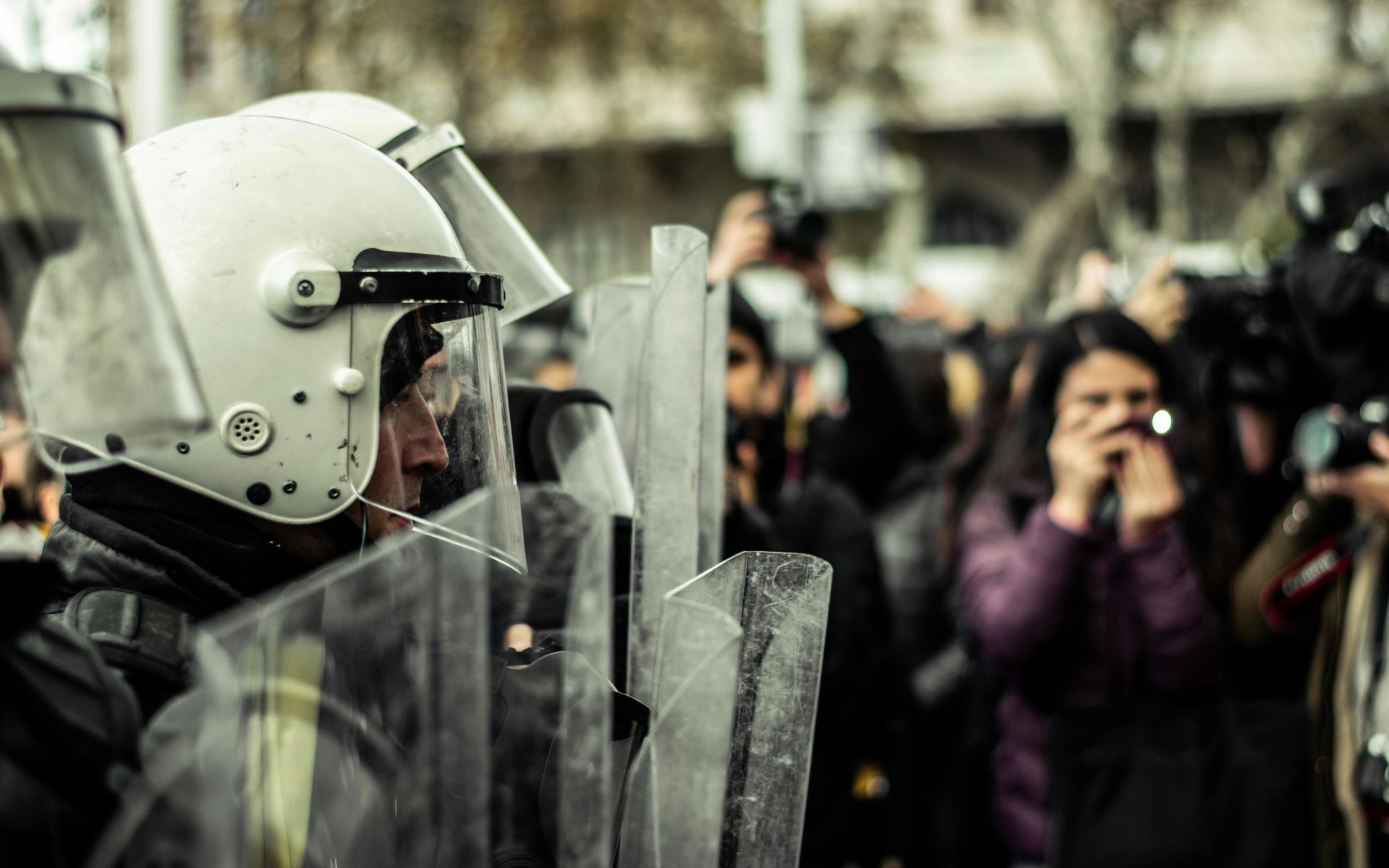
Alongside the trade union rallies, student demonstrations have seen moments of tension and clashes in Rome and Bologna. In the capital, some demonstrators set fire to an image of Defence Minister Guido Crosetto at the start of the march from Piazzale Aldo Moro. News reports also describe the throwing of firecrackers and other objects towards the nearby Air Force headquarters, in the area covered by the student mobilisation. The Ministry of Education had been identified as a sensitive location and placed under heightened security, but available reports do not clearly establish that the objects were thrown directly at the ministry building.
In Bologna, clashes took place in Vicolo Santa Lucia, close to the headquarters of Confindustria Emilia. A group of demonstrators attempted to break through a police cordon protecting the street; officers in riot gear responded with several charges to push them back. The demonstrators were then moved towards Via Castiglione, where the group regrouped. These incidents took place during the student-led protests and should be distinguished from the wider trade union demonstrations taking place across Italy.