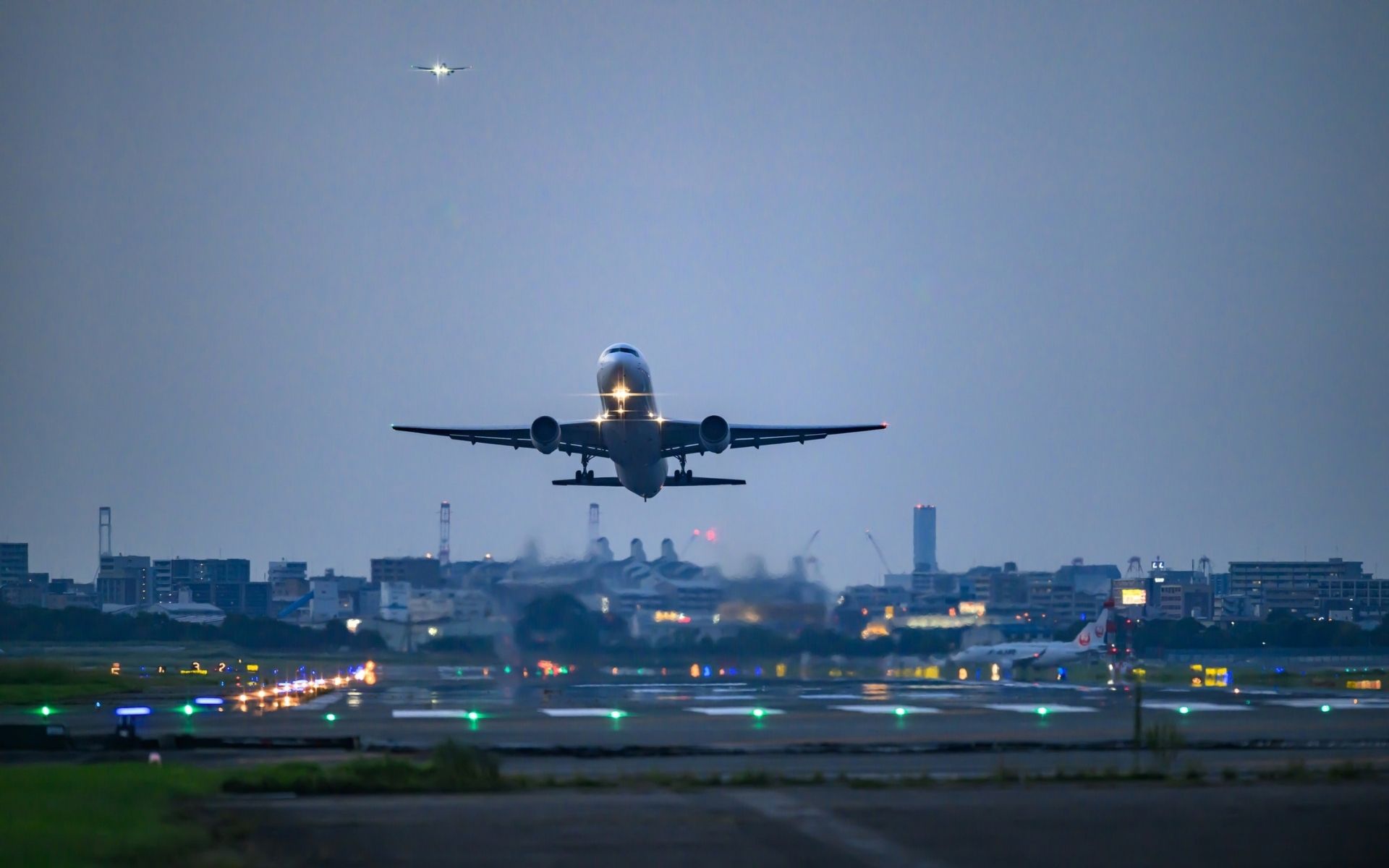
More people are flying than ever before.
After the extraordinary post-pandemic recovery, global aviation continued expanding in 2025. Passenger demand increased by 5.3% worldwide, while international traffic grew even faster, rising 7.1% compared with the previous year.
And the expansion is not over. Global airport traffic is expected to reach around 10.2 billion passengers in 2026, although growth is becoming slower and increasingly uneven between regions.
But where exactly is everyone flying?
The answer is surprisingly concentrated. According to OAG’s latest complete annual ranking, seven of the ten busiest international air routes are in Asia. Europe appears only once—and that route crosses the Atlantic to the United States. The ranking is based on scheduled airline seat capacity in both directions during 2025, giving us the clearest full-year picture currently available of the international routes carrying the greatest volume of air traffic.
Contents
The 10 Busiest International Flight Routes in the World
- Hong Kong – Taipei: 6.83 million seats
- Cairo – Jeddah: 5.75 million seats
- Kuala Lumpur – Singapore: 5.57 million seats
- Seoul Incheon – Tokyo Narita: 5.07 million seats
- Seoul Incheon – Osaka Kansai: 4.96 million seats
- Jakarta – Singapore: 4.62 million seats
- Dubai – Riyadh: 4.47 million seats
- Bangkok – Hong Kong: 4.17 million seats
- Tokyo Narita – Taipei: 4.02 million seats
- New York JFK – London Heathrow: 3.97 million seats
What immediately stands out is how little the ranking resembles the traditional image of global aviation dominated by London, Paris, New York and Dubai.
Asia is now the real centre of the world’s busiest international short-haul routes.
1. Hong Kong – Taipei: The World’s Busiest International Route
The number one route connects Hong Kong with Taipei, and its scale is remarkable.
Airlines offered approximately 6.83 million seats between the two cities in 2025, making it the busiest international air corridor in the world for the second consecutive year.
The route benefits from a powerful combination of business travel, tourism and strong cultural and economic connections. Seven airlines competed on the route during the year, helping maintain extremely high frequency.
Capacity increased slightly compared with 2024, although it remains below 2019 levels. That makes its first-place position particularly interesting: the route has not even fully returned to its pre-pandemic capacity, yet it still leads the world.
2. Cairo – Jeddah: The Middle East’s Aviation Giant
Second place tells a completely different story.
Cairo to Jeddah offered around 5.75 million seats in 2025, and capacity is now approximately 71% higher than it was in 2019.
The enormous demand comes from several sources. Egypt and Saudi Arabia have deep economic and family connections, while Jeddah is also the principal aviation gateway for millions of Muslim travelers heading toward Mecca.
Low-cost airlines have become increasingly important too, helping make the route more accessible and increasing competition between carriers.
3. Kuala Lumpur – Singapore: Short Distance, Huge Demand
You do not need a long flight to create one of the world’s busiest international air routes.
Kuala Lumpur and Singapore are separated by only a few hundred kilometres, yet airlines offered approximately 5.57 million seats between them in 2025.
The reasons are easy to understand. Singapore is one of Asia’s biggest financial and aviation hubs, while Kuala Lumpur is a major regional business and tourism centre. Seven airlines served the route, creating fierce competition.
That competition also helped produce one of the most interesting numbers in the ranking: OAG calculated an average lowest one-way economy fare of only around $62, the cheapest among the world’s ten busiest international routes.
4 and 5. South Korea and Japan Are Connected Like Never Before
The next two positions tell the same broader story: travel between South Korea and Japan has become enormous.
Seoul Incheon – Tokyo Narita carried capacity of roughly 5.07 million seats, while Seoul Incheon – Osaka Kansai reached almost 4.96 million.
Low-cost carriers play a particularly important role. On the Tokyo route, they account for a majority of flights, while on Seoul–Osaka the low-cost share is even higher.
Short flight times, strong tourism demand and increasingly affordable fares have effectively turned travel between Korea and Japan into something resembling a highly competitive regional shuttle market.
6. Jakarta – Singapore: Business, Tourism and Regional Connectivity
Jakarta and Singapore form one of Southeast Asia’s most important international air corridors.
Airlines offered approximately 4.62 million seats between the two cities in 2025, placing the route sixth in the global ranking. The connection benefits from intense business travel, tourism, family ties and Singapore’s role as one of Asia’s most important aviation hubs.
For Indonesian travelers, Singapore is also a major gateway to long-haul destinations. That means many passengers are not simply flying between the two cities: they are connecting onward to Europe, Australia, the Middle East or other parts of Asia.
7. Dubai – Riyadh: Gulf Aviation Keeps Growing
The route between Dubai and Riyadh reached around 4.47 million scheduled seats in 2025, making it the seventh-busiest international route in the world.
Its rise reflects the extraordinary growth of Gulf aviation. Dubai remains one of the world’s biggest international connecting hubs, while Riyadh is expanding rapidly as Saudi Arabia invests heavily in tourism, business and aviation.
Demand therefore comes from several directions at once: corporate travel, tourism, visiting friends and relatives, and passengers connecting through Dubai to destinations much farther away.
8. Bangkok – Hong Kong: Tourism Still Drives Huge Volumes
Bangkok and Hong Kong remain deeply connected despite changes in Chinese outbound tourism.
The route offered around 4.17 million seats in 2025. OAG also found that average lowest one-way economy fares fell 13% year over year, reflecting softer demand and intense airline competition.
Thailand remains one of Asia’s biggest leisure destinations, while Hong Kong provides both a large local passenger base and extensive connections to mainland China and the rest of the world.
That combination keeps the route among the global top ten even when demand fluctuates from one year to another.
9. Tokyo Narita – Taipei: Another Asian Mega-Route
Tokyo and Taipei provide another example of how strongly Northeast Asian cities are connected by air.
The Narita–Taipei route offered roughly 4.02 million seats in 2025, supported by tourism, business travel and a large number of airline choices.
Japan has experienced a powerful international tourism recovery, while Taiwan remains closely connected to the Japanese market. Short flight times also make repeat leisure trips and weekend breaks much easier than on long-haul routes.
10. New York JFK – London Heathrow: The World’s Great Long-Haul Route
The final route in the top ten is also the only one connecting Europe and North America.
New York JFK to London Heathrow offered approximately 3.97 million seats during 2025, confirming its status as one of aviation’s most important long-haul corridors.
Unlike many routes higher in the ranking, this is not a short regional flight. The route crosses the Atlantic and connects two of the world’s most important financial, cultural and business capitals.
Corporate travel remains important, but tourism and visiting friends and relatives also generate enormous demand. Several major airlines compete directly on the route, helping maintain frequent departures throughout the day.
The fact that JFK–Heathrow is the only European route in the top ten also shows just how heavily the global ranking has shifted toward Asia and the Middle East.
Why Does Asia Dominate the Ranking?
Seven of the ten busiest international routes are located in Asia, and that is not a coincidence.
The region combines very large urban populations, relatively short distances between major cities, expanding middle classes and huge low-cost airline networks. A flight between Singapore and Kuala Lumpur or Seoul and Osaka can effectively function like an international shuttle.
Asia-Pacific is also expected to remain the fastest-growing major aviation region in 2026. IATA forecasts passenger traffic in the region to expand by around 7.3% this year, compared with global growth of 4.9%.
That means today’s ranking may become even more Asia-heavy as capacity continues to return and airlines add new aircraft and frequencies.
Air Travel Is Still Growing in 2026
The broader aviation picture remains remarkably strong.
Global passenger demand increased 5.3% in 2025, according to IATA, with international demand growing 7.1%. Airports Council International estimates that airports handled around 9.8 billion passengers during the year.
For 2026, ACI expects global airport traffic to rise another 3.9% to approximately 10.2 billion passengers.
The growth rate is slowing compared with the rapid rebound immediately after the pandemic, but the direction remains clear: more people are flying, international travel continues expanding and some airports are approaching capacity limits.
That growth also creates challenges. More passengers can mean greater pressure on airports, air traffic control systems and airline operations, especially during peak holiday periods.
What These Routes Tell Us About How the World Travels
The world’s busiest international routes reveal something broader than where people are going on holiday.
They show how modern air travel increasingly depends on dense regional networks. The biggest passenger flows are often not spectacular 12-hour intercontinental journeys, but short flights connecting major cities that travelers use repeatedly for work, family, tourism and onward connections.
Hong Kong–Taipei remaining number one in OAG’s latest monthly data for August 2026 suggests that this pattern is continuing. Seoul–Tokyo has also strengthened considerably, reinforcing Asia’s dominance of the international route market.
If you’re planning your own flights this summer, you may also want to explore Europe’s most wanted August 2026 holiday destinations to see where travelers are heading during the busiest part of the season.
And with more passengers comes a greater chance of delays and cancellations. Our guide to Europe’s changing air passenger rights explains what travelers may be entitled to when a flight goes wrong.
For the complete ranking, route capacity data and monthly updates, readers can consult OAG’s official Busiest Flight Routes tracker, which monitors how the world’s largest domestic and international air corridors change throughout the year.