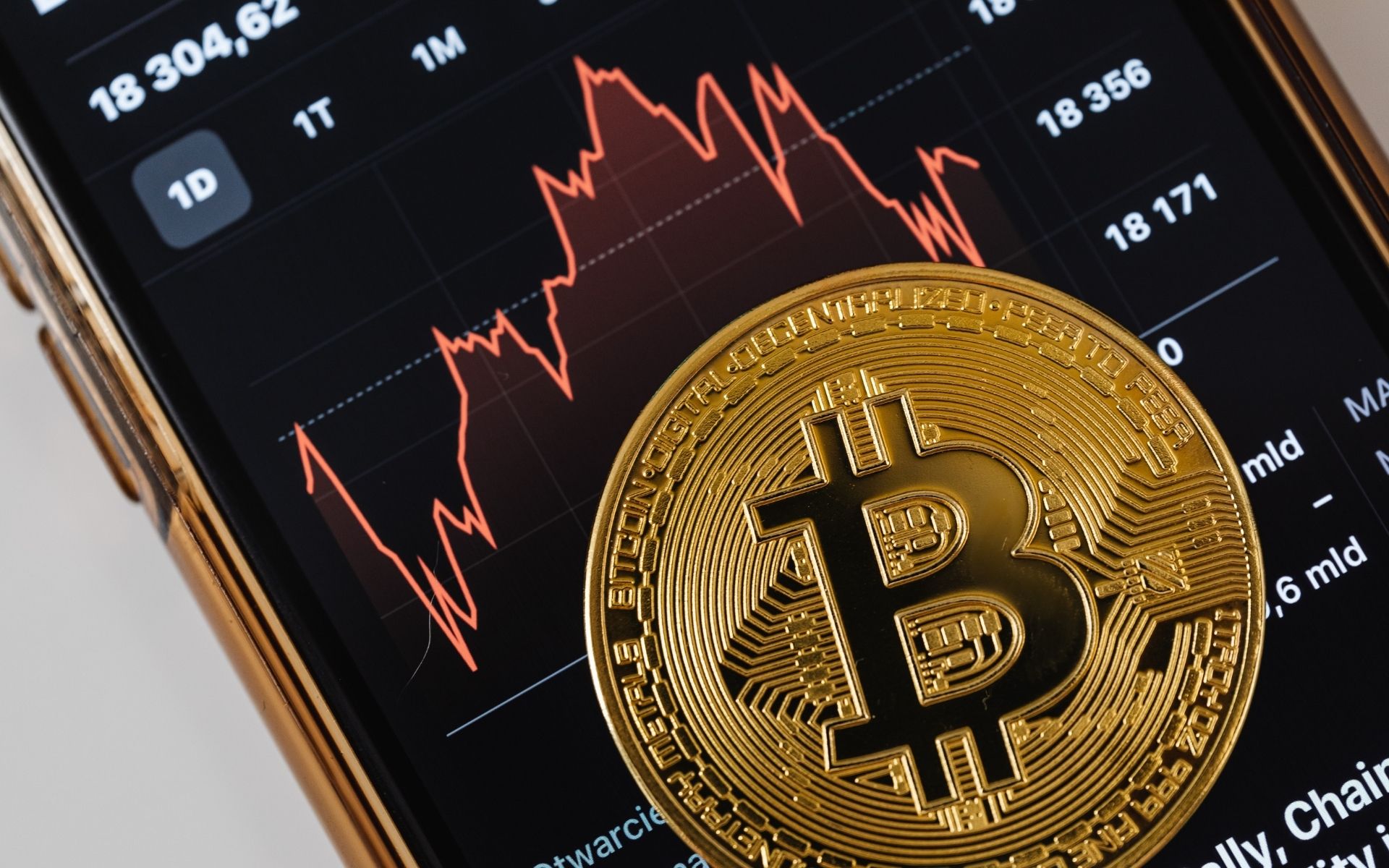
The cryptocurrency market is entering the second half of 2026 in a very different shape from a few years ago. Bitcoin remains the undisputed reference point, but the sector is no longer simply a race between Bitcoin and a collection of smaller tokens. Ethereum, Solana, XRP, stablecoins and decentralised-finance platforms are playing increasingly distinct roles.
There is also a new factor: traditional finance is becoming much more involved in digital assets, while governments are moving towards clearer regulatory frameworks. The result is a market that is more mature, but certainly not less volatile.
Contents
Bitcoin: still the market benchmark
Bitcoin remains the cryptocurrency against which almost everything else is measured.
Its performance in 2026 has been anything but linear. After reaching more than 126,000 dollars in October 2025, BTC went through a substantial correction before recovering strongly in August. On August 20, Bitcoin moved back above 70,000 dollars, gaining more than 3% during the session after renewed optimism surrounding US crypto legislation. Reuters reported that the cryptocurrency was still about 18% below its 2026 level at the beginning of the year, despite the latest recovery.
This is an important distinction: Bitcoin remains the largest and most established digital asset, but being the market leader does not mean delivering positive returns every year.
Its importance increasingly comes from something else as well: institutional adoption. Spot exchange-traded products, corporate Bitcoin holdings and professional investment vehicles have created a much closer relationship between BTC and traditional financial markets.
Ethereum: more than just another cryptocurrency
Ethereum occupies a different position. While Bitcoin is primarily associated with digital scarcity and a store-of-value narrative, Ethereum is also the infrastructure supporting a huge part of the blockchain economy. Decentralised finance, tokenised assets, stablecoins and thousands of applications rely on its network.
That makes ETH particularly interesting in 2026 because the question is no longer simply how much the token is worth. The bigger question is how much economic activity is actually taking place on the network.
Ethereum also faces increasingly serious competition. Solana has established itself as one of the most active alternatives, particularly in decentralised finance, trading and tokenisation. Its 2026 ecosystem has attracted increasing attention from financial institutions and infrastructure providers, while developers continue to expand its use beyond its original reputation as a high-speed blockchain.
Solana, XRP and the new generation of major players
The crypto market is now much more diversified than it was during its early years. Solana (SOL) has become one of the most closely watched blockchain ecosystems, thanks to its activity in DeFi, trading and tokenised assets. Its appeal is based not only on the price of its token but also on the volume of applications and financial activity taking place on the network.
XRP, meanwhile, occupies a very different niche. Its long-standing focus on payments and cross-border transfers has kept it among the most prominent digital assets by market value.
Other projects, including BNB Chain and Hyperliquid, are also attracting attention. Hyperliquid is particularly interesting because of its role in decentralised derivatives trading.
The important point is that there is no single definition of success in the crypto industry. A token can perform well because its price rises, while a blockchain can become more important because it attracts users, developers, transactions or financial applications.
Stablecoins are changing the game
Stablecoins deserve a separate category. USDT and USDC are not designed to behave like Bitcoin or Solana. Their purpose is essentially the opposite: maintaining a relatively stable value, generally linked to the US dollar.
Yet they have become one of the most important parts of the digital-asset economy. Institutional investors are increasingly exploring stablecoins not only for cryptocurrency trading, but also for payments, liquidity management and near-instant settlement.
This could ultimately become one of the most important developments of the entire sector. The use of blockchain technology does not necessarily require users to hold highly volatile assets. Stablecoins offer a way to combine blockchain infrastructure with a relatively stable unit of account.
Crypto meets traditional finance
Perhaps the biggest change in 2026 is happening outside the blockchains themselves.
The boundary between cryptocurrency markets and traditional finance is becoming increasingly blurred. Spot ETFs, derivatives, tokenised securities, corporate crypto holdings and institutional custody services are turning digital assets into a more conventional component of the financial system.
Research published by institutional market participants has identified stablecoins, tokenised real-world assets and institutional infrastructure as some of the central themes of the 2026 market.
This does not mean that crypto has become a conventional asset class. Volatility, cybersecurity risks, regulatory uncertainty and technological risks remain significant. But the profile of the market is clearly changing.
Regulation could determine the next phase
The regulatory environment, particularly in the United States, may have an enormous influence on the sector.
The proposed CLARITY Act is designed to establish clearer definitions for digital assets and to clarify the respective responsibilities of the SEC and the Commodity Futures Trading Commission (CFTC). President Donald Trump again urged Congress to approve the legislation on August 20, arguing that clearer rules would strengthen America’s position in the global crypto industry.
The legislation remains politically contested, however, and its final outcome is uncertain. That uncertainty itself has become a market factor. For cryptocurrencies such as Bitcoin, Ethereum, Solana and XRP, clearer rules could potentially make institutional participation easier. For stablecoins, meanwhile, regulation could be even more important because their future depends heavily on how governments classify issuers, reserves, payments and financial services.
So, which cryptocurrencies are performing best?
There is no single answer. Bitcoin remains the dominant asset by market importance and institutional recognition. Ethereum remains the leading programmable blockchain and a central pillar of DeFi and tokenisation. Solana has established itself as one of the strongest competing ecosystems, while XRP retains a prominent position in the payments-focused segment.
Stablecoins such as USDT and USDC are becoming increasingly important as financial infrastructure rather than speculative assets. That is perhaps the most useful way to look at crypto in 2026.
The market is no longer simply asking which coin will rise the most. It is increasingly asking which networks are attracting users, which assets are gaining institutional acceptance, which technologies are solving real financial problems and which projects can survive the transition towards greater regulation. And that makes the cryptocurrency market more complex than ever — but also considerably more interesting.